As promised (although more than a year late) the winners of Super Bowl LII – The Philadelphia Eagles.
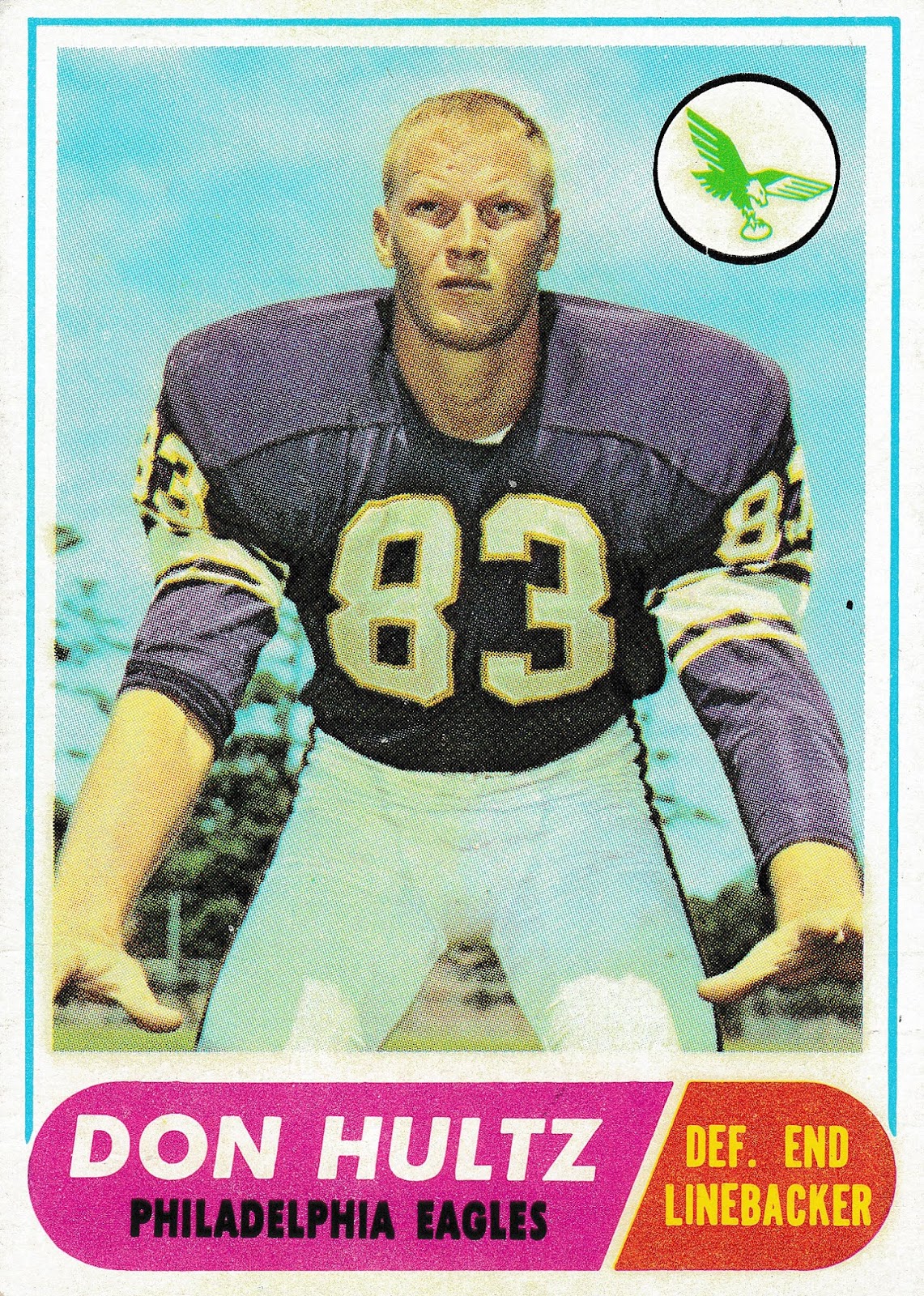
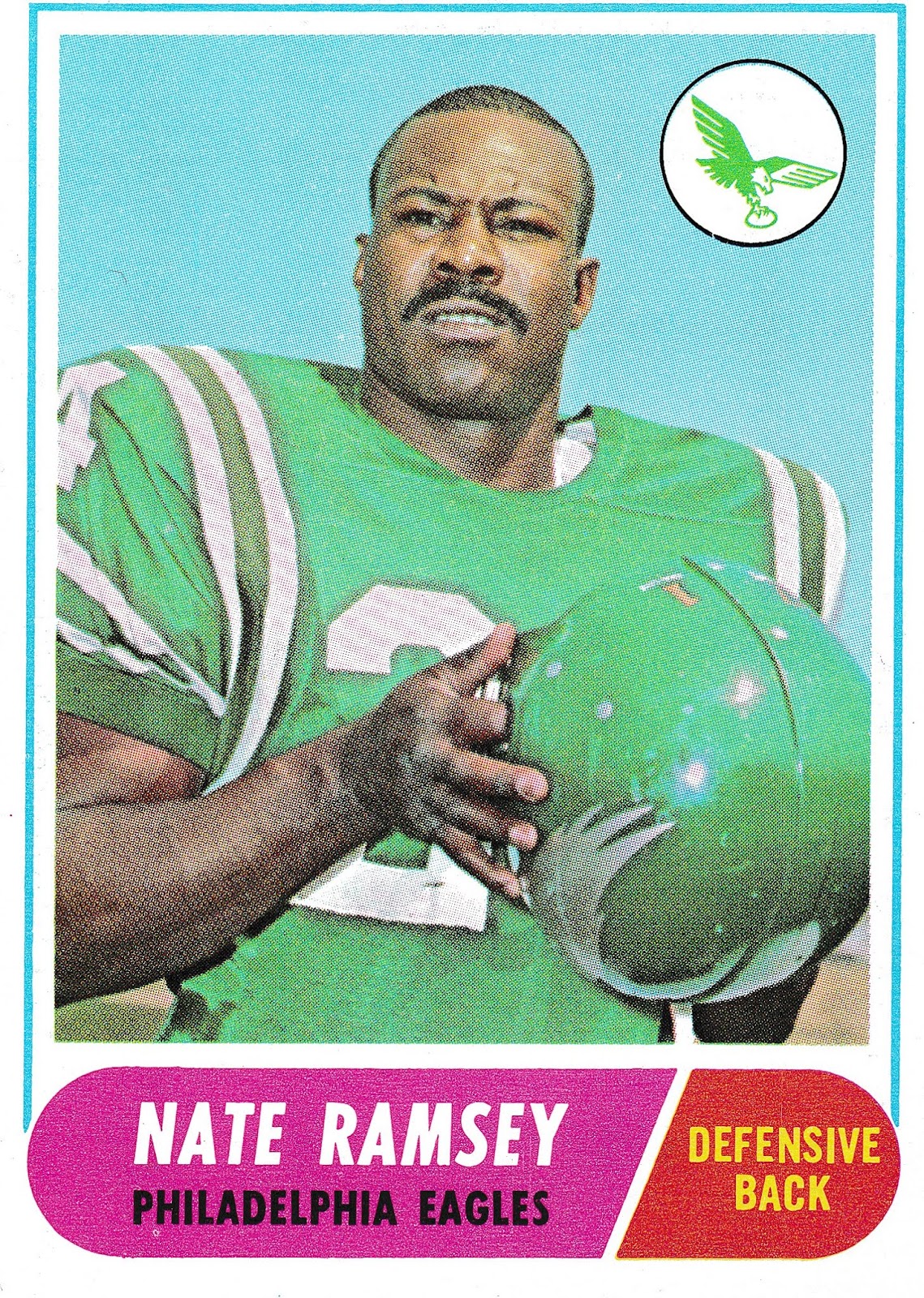
Here is the 1968 edition, about as far from a Super Bowl champion as you can get.
The Eagles started off the 1968 season by losing their first 11 games (by a combined score of 310-144). I don't think tanking was a thing back then, like it is in the NBA now. (The Philadelphia 76ers intentionally tanked 3 consecutive seasons, and still managed to screw it up – drafting a series of players with known injury histories. Only Joel Embid remains as a tanking prize, and he can’t stay in the lineup for extended periods. But I digress.)
The Eagles could have stayed the course with their unintentional tanking, by making it all about “playing the youngsters to see what we have to build for the future”, but noooo, they had to go and win 2 of their final 3 games, thus blowing their chance for the #1 overall draft pick in 1969 (O.J. Simpson).
Instead they settled for the 3rd pick, and chose Leroy Keyes, a running back from Purdue. Even THAT was a screw-up, as the Steelers selected Joe Greene with the very next pick. Keyes had 2 poor seasons as a running back, followed by 2 less-than-serviceable seasons as a strong safety before they finally cut him loose.
1968 was the first year Topps issued cards for NFL players since 1963, so their first series cards have old photographs for the NFL players (and presumably newer photos for AFL players). In the 2nd series, new photos are seen.
Norm Snead was the team's quarterback from 1964-1970, acquired from the Redskins in a questionable deal for Sonny Jurgensen.
Gary Ballman was acquired from the Steelers just before the 1967 season for fullback Earl Gros and guard Bruce Van Dyke. He was a starting wide receiver in '67 and '68, and the starting tight end from 1969-71.
Mike Ditka was also acquired just before the 1967 season, from the Bears for 3rd-string QB Jack Concannon. He was the starter in 1967, but spent most of 1968 either injured or suspended for his skirmishes with the coaching staff. Ditka was traded to the Cowboys before the 1969 season.
Sam Baker came over from the Cowboys in 1964, and was the kicker from 1964-69, and punter from 1964-68.
Don Hultz was acquired from the Vikings before the 1964 season, and was the starting left end from 1965-67. After 2 seasons on the bench, he was also the starting left DT from 1970-72. (There's no evidence he ever played linebacker.) After one more season on the bench, he finished up with the Bears in 1974.
After a few seasons with the Browns and Lions, Floyd Peters was the Eagles' starting left tackle from 1964-69, though missing part of 1968 with injuries. He made 3 Pro Bowls while an Eagle. Peters ended his career with the Redskins in 1970.
Like Peters, Dave Lloyd also played for the Browns and Lions before becoming an Eagle in 1963. He was the team's starting middle linebacker from 1963-69, and for the first 5 games of 1970 before he was replaced by Tim Rossovich. Dave made the Pro Bowl in his final full season (1969).
Nate Ramsey was the Eagles' 14th-round pick in 1963. He played in all but 6 games for the Eagles from 1963-72, starting about half the games in '63 and '64 as a cornerback, before moving to starting strong safety from 1965-70. He returned to cornerback for 1971-72, then played for the Saints in 1973.
Wednesday, July 10, 2019
Tuesday, November 1, 2016
Los Angeles Rams
Here are the cards for the 1968 Rams. Most team sets in 1968 included 8 or 9 cards. There are 12 Rams cards because 3 of them (Milt Plum, Tommy Watkins, Pat Studstill) were recently traded from the Lions to the Rams. (The Lions only have 6 cards in the set.)
The Rams were coming off an 11-1-2 season in 1967, winning their division but losing to the Packers in the playoffs. I'm not sure why the Rams made the trade for the above players, because Roman Gabriel, Les Josephson, and both starting wide receivers (Jack Snow and Bernie Casey) made the Pro Bowl in 1967. Fullback Dick Bass also rushed for 600+ yards, so it seems they didn't really need the services of Plum, Watkins, or Studstill.
In 1968 the Rams dropped to 10-3. Gabriel made the Pro Bowl again, Bass was one of the team's starting backs (with Willie Ellison replacing Josephson), and Snow and Casey each had 29 catches. Pat Studstill only caught 7 balls and was mainly used as the punter.
Roman Gabriel was the Rams' #1 pick in 1962, and was the team's starting QB from 1963 to 1972, He made the Pro Bowl from 1967-69. Traded to the Eagles after 1972, he played 5 more seasons in Philly (3 as the starter) and 1 more Pro Bowl berth.
Drafted by the Browns in 1957, Milt Plum played 11 seasons with the Browns and Lions (mostly as the #1 QB), then finished his career as a backup with the Rams in '68 and the Giants in '69. He made the Pro Bowl in '61 and '62.
Les Josephson played his entire career with the Rams (1964-74, missing the 1968 season). He was a starter every season but '66 and '74-'76, and made the 1967 Pro Bowl squad.
Dick Bass was the 2nd overall pick in 1959, and played 10 seasons in LA (7 as a starter). He made 3 Pro Bowls.
Tom Watkins played for the Browns in 1961 and the Lions from 1962-67. He was mostly a return man with the Lions, and led the NFL in punt returns and return yardage in 1963. Although part of the Lions/Rams trade after 1967, he did not play for the Rams. He played in 1 game for the Steelers in '68, then retired.
Jack Snow was drafted #1 by the Vikings in 1965, but was the Rams' starting split end from 1965 to 1974, making the Pro Bowl in 1967. He finished his career as a Rams' backup in 1975.
Bernie Casey was picked #1 by the 49ers in 1961, and after one year as a backup, he was their starting flanker for 5 seasons. He finished his career as the Rams' flanker in '67 and '68. After football, Bernie acted in dozens of movies, including the role of Felix Leiter in "Never Say Never Again".
Pat Studstill played for the Lions from 1961-67. He was a flanker and return man for his first few seasons, then exchanged his return duties for punting chores beginning in 1965. He made the Pro Bowl in '65 and '66, and led the NFL in receiving yards in 1966. Traded to the Rams after 1967, he was used mostly as a punter, only catching 7, 3, 18, and 0 balls in his 4 seasons in LA. He was the Patriots' punter in 1972, his final season.
Lamar Lundy was the right defensive end in the Rams' famed "Fearsome Foursome" defensive line. He played his entire career (1957-69) with the Rams, and was a starter from 1959-67.
Roger Brown was the starting right defensive tackle for the Lions in his first 7 seasons (1960-66), with Pro Bowl appearances in the last 5 seasons. Acquired by the Rams in 1967 to replace the retired Rosey Grier, he played 3 more seasons (2 as a starter, plus another Pro Bowl appearance).
Maxie Baughan was the Eagles' 2nd-round pick in 1960, and was a starting outside linebacker for the next 11 seasons (including 9 Pro Bowls). He played 6 seasons with the Eagles, and 5 with the Rams. He retired after the 1970 season, but was activated by the Redskins (where he was coaching) for 2 games in 1974.
Ed Meador was drafted by the Rams in 1959, and played all 12 seasons as a starting DB for them. After 5 years as a cornerback, he moved to free safety for his final 7 seasons.
Also check out the 1967 and 1971 Rams.
.
The Rams were coming off an 11-1-2 season in 1967, winning their division but losing to the Packers in the playoffs. I'm not sure why the Rams made the trade for the above players, because Roman Gabriel, Les Josephson, and both starting wide receivers (Jack Snow and Bernie Casey) made the Pro Bowl in 1967. Fullback Dick Bass also rushed for 600+ yards, so it seems they didn't really need the services of Plum, Watkins, or Studstill.
In 1968 the Rams dropped to 10-3. Gabriel made the Pro Bowl again, Bass was one of the team's starting backs (with Willie Ellison replacing Josephson), and Snow and Casey each had 29 catches. Pat Studstill only caught 7 balls and was mainly used as the punter.
Roman Gabriel was the Rams' #1 pick in 1962, and was the team's starting QB from 1963 to 1972, He made the Pro Bowl from 1967-69. Traded to the Eagles after 1972, he played 5 more seasons in Philly (3 as the starter) and 1 more Pro Bowl berth.
Drafted by the Browns in 1957, Milt Plum played 11 seasons with the Browns and Lions (mostly as the #1 QB), then finished his career as a backup with the Rams in '68 and the Giants in '69. He made the Pro Bowl in '61 and '62.
Les Josephson played his entire career with the Rams (1964-74, missing the 1968 season). He was a starter every season but '66 and '74-'76, and made the 1967 Pro Bowl squad.
Dick Bass was the 2nd overall pick in 1959, and played 10 seasons in LA (7 as a starter). He made 3 Pro Bowls.
Tom Watkins played for the Browns in 1961 and the Lions from 1962-67. He was mostly a return man with the Lions, and led the NFL in punt returns and return yardage in 1963. Although part of the Lions/Rams trade after 1967, he did not play for the Rams. He played in 1 game for the Steelers in '68, then retired.
Jack Snow was drafted #1 by the Vikings in 1965, but was the Rams' starting split end from 1965 to 1974, making the Pro Bowl in 1967. He finished his career as a Rams' backup in 1975.
Bernie Casey was picked #1 by the 49ers in 1961, and after one year as a backup, he was their starting flanker for 5 seasons. He finished his career as the Rams' flanker in '67 and '68. After football, Bernie acted in dozens of movies, including the role of Felix Leiter in "Never Say Never Again".
Pat Studstill played for the Lions from 1961-67. He was a flanker and return man for his first few seasons, then exchanged his return duties for punting chores beginning in 1965. He made the Pro Bowl in '65 and '66, and led the NFL in receiving yards in 1966. Traded to the Rams after 1967, he was used mostly as a punter, only catching 7, 3, 18, and 0 balls in his 4 seasons in LA. He was the Patriots' punter in 1972, his final season.
Lamar Lundy was the right defensive end in the Rams' famed "Fearsome Foursome" defensive line. He played his entire career (1957-69) with the Rams, and was a starter from 1959-67.
Roger Brown was the starting right defensive tackle for the Lions in his first 7 seasons (1960-66), with Pro Bowl appearances in the last 5 seasons. Acquired by the Rams in 1967 to replace the retired Rosey Grier, he played 3 more seasons (2 as a starter, plus another Pro Bowl appearance).
Maxie Baughan was the Eagles' 2nd-round pick in 1960, and was a starting outside linebacker for the next 11 seasons (including 9 Pro Bowls). He played 6 seasons with the Eagles, and 5 with the Rams. He retired after the 1970 season, but was activated by the Redskins (where he was coaching) for 2 games in 1974.
Ed Meador was drafted by the Rams in 1959, and played all 12 seasons as a starting DB for them. After 5 years as a cornerback, he moved to free safety for his final 7 seasons.
Also check out the 1967 and 1971 Rams.
.
Saturday, September 5, 2015
1968 (and 1969) Custom Cards
Early last year, I asked John over at the "Cards That Never Were" blog to make some custom cards in the style of the 1967, 1968, and 1971 football sets - the only football sets that I have completed (well, except for the '68 Johnny Unitas and Bob Griese cards). I gave him a list of starting quarterbacks that Topps or Philly Gum had omitted from their sets.
He soon replied with a beautiful set of QB cards: 5 for the 1971 set (which I posted to my 1971 blog last July), 6 for the 1967 NFL set (which I will post to my 1967 blog in the near future), and 2 each for 1968 and 1969, which are shown below.
(Another time, I asked him to add additional Green Bay Packers to the 1967 set, but he said that being a Chicago Bears fan, that would not be possible - LOL.)
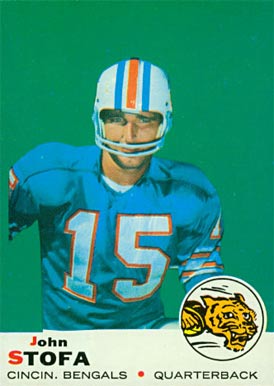
The Steelers and Bengals were both missing QB cards in the 1968 set. Bill Nelsen had just been traded to the Browns, giving 2 QB cards for Cleveland, and none for Pittsburgh. The Bengals were an expansion team in 1968, and had no QB card - probably because they didn't select any quarterbacks in the expansion draft. Although ex-Dolphin John Stofa was the primary QB in their inaugural season, Sam Wyche also saw some playing time.
Dick Shiner was drafted by the Redskins in 1964, and spent 3 seasons backing up Sonny Jurgensen (i.e. - no playing time), before riding out the 1967 season on the Browns' bench. His only seasons as a starter came in 1968 and 1969 for the Steelers. Pittsburgh drafted Terry Bradshaw in 1970, (and Terry Hanratty in 1969), so Shiner's services were no longer required in the Steel City. He spent 1970-74 bouncing around with the Giants, Falcons, and Patriots.
An undrafted free agent, Sam Wyche began his career with the Bengals in 1968, and made 3 starts each season (1968-70). He was on the Redskins roster from 1971 to 1973, and although playing 8 games during that time, he never threw a pass. He also played for the Lions in 1974 and the Cardinals in 1976. Wyche coached the Bengals from 1984-91, and the Buccaneers from 1992-95.
***
Although I don't have a 1969 blog, I have a handful of 1969 cards and asked John to fill in the missing QBs there as well. Jack Kemp missed the entire 1968 season with a knee injury, and was left out of the 1969 set. In fact, there was no Bills' QB in that set. For the 2nd-year Bengals, Topps included John Stofa (in a Dolphins' jersey and helmet), but Stofa had returned to the Dolphins in 1969. Their starting QB in '69 was rookie sensation Greg Cook.
Jack Kemp was drafted by the Lions in 1957, and was cut by the Steelers later that season. (The Steelers also cut Johnny Unitas and Len Dawson in the late 1950s!) When the AFL started in 1960, Kemp was the Chargers' starting QB in 1960 and 1961. Injured for part of 1962, he was traded to the Bills during that season.
Jack was the Bills' regular QB from 1963 to 1969, except for missing all of 1968 with an injury. (With Kemp gone, the Bills went 1-12-1 that season, capturing the #1 draft pick - O.J. Simpson.) After retiring following the 1969 season he went into politics, and was eventually a presidential candidate in 1988.
Greg Cook was the Bengals' #1 pick in 1969 (the 5th overall pick in the "O.J. Simpson draft"). He was a hometown favorite from the University of Cincinnati, and was an immediate success - leading the AFL in completion percentage and was the league's top-rated QB, despite missing 3 early-season games with what was later discovered to be a rotator cuff injury. Because he returned to play with the injury, it did further damage and essentially ended his career after 1 season. Cook passed away in 2012 at age 65.
***
Upon the recent death of Doug Buffone, John also made Buffone cards that were missing from the Topps sets. Here are two of them:
Thanks John!
.
He soon replied with a beautiful set of QB cards: 5 for the 1971 set (which I posted to my 1971 blog last July), 6 for the 1967 NFL set (which I will post to my 1967 blog in the near future), and 2 each for 1968 and 1969, which are shown below.
(Another time, I asked him to add additional Green Bay Packers to the 1967 set, but he said that being a Chicago Bears fan, that would not be possible - LOL.)
The Steelers and Bengals were both missing QB cards in the 1968 set. Bill Nelsen had just been traded to the Browns, giving 2 QB cards for Cleveland, and none for Pittsburgh. The Bengals were an expansion team in 1968, and had no QB card - probably because they didn't select any quarterbacks in the expansion draft. Although ex-Dolphin John Stofa was the primary QB in their inaugural season, Sam Wyche also saw some playing time.
Dick Shiner was drafted by the Redskins in 1964, and spent 3 seasons backing up Sonny Jurgensen (i.e. - no playing time), before riding out the 1967 season on the Browns' bench. His only seasons as a starter came in 1968 and 1969 for the Steelers. Pittsburgh drafted Terry Bradshaw in 1970, (and Terry Hanratty in 1969), so Shiner's services were no longer required in the Steel City. He spent 1970-74 bouncing around with the Giants, Falcons, and Patriots.
An undrafted free agent, Sam Wyche began his career with the Bengals in 1968, and made 3 starts each season (1968-70). He was on the Redskins roster from 1971 to 1973, and although playing 8 games during that time, he never threw a pass. He also played for the Lions in 1974 and the Cardinals in 1976. Wyche coached the Bengals from 1984-91, and the Buccaneers from 1992-95.
***
Although I don't have a 1969 blog, I have a handful of 1969 cards and asked John to fill in the missing QBs there as well. Jack Kemp missed the entire 1968 season with a knee injury, and was left out of the 1969 set. In fact, there was no Bills' QB in that set. For the 2nd-year Bengals, Topps included John Stofa (in a Dolphins' jersey and helmet), but Stofa had returned to the Dolphins in 1969. Their starting QB in '69 was rookie sensation Greg Cook.
Jack Kemp was drafted by the Lions in 1957, and was cut by the Steelers later that season. (The Steelers also cut Johnny Unitas and Len Dawson in the late 1950s!) When the AFL started in 1960, Kemp was the Chargers' starting QB in 1960 and 1961. Injured for part of 1962, he was traded to the Bills during that season.
Jack was the Bills' regular QB from 1963 to 1969, except for missing all of 1968 with an injury. (With Kemp gone, the Bills went 1-12-1 that season, capturing the #1 draft pick - O.J. Simpson.) After retiring following the 1969 season he went into politics, and was eventually a presidential candidate in 1988.
Greg Cook was the Bengals' #1 pick in 1969 (the 5th overall pick in the "O.J. Simpson draft"). He was a hometown favorite from the University of Cincinnati, and was an immediate success - leading the AFL in completion percentage and was the league's top-rated QB, despite missing 3 early-season games with what was later discovered to be a rotator cuff injury. Because he returned to play with the injury, it did further damage and essentially ended his career after 1 season. Cook passed away in 2012 at age 65.
***
Upon the recent death of Doug Buffone, John also made Buffone cards that were missing from the Topps sets. Here are two of them:
Thanks John!
.
Saturday, June 7, 2014
Washington Redskins
Here are the 1968 Redskins. Somehow, I had none of these cards back in 1968 except for Chris Hanburger. (I had no series #2 cards back then, but I also missed 4 of the 5 'Skins in series #1.)
The Redskins finished 3rd (out of 4) in their division in 1967 with a record of 5-6-3. In 1968, they would finish 3rd again, while their record dropped to 5-9.
Sonny Jurgensen broke in with the Eagles in 1957. After riding the bench for the entire 1958-60 seasons (behind the newly-acquired Norm Van Brocklin), Jurgy took over the starting job in 1961, making the Pro Bowl and leading the league in TDs and completions that season. After 2 more years in Philly, he was traded to the Redskins for Norm Snead, and was Washington's starting QB from 1964-70, making the Pro Bowl 4 more times. He finished his career as a backup to Bill Kilmer from 1971-74.
Bobby Mitchell began his career with the Cleveland Browns, and was their starting halfback and kick returner from 1958 to 1961. He moved on to the Redskins in 1962 and became their starting flanker. Bobby led the NL with 72 catches and 1384 receiving yards in 1962. He also led the league with 1436 yards in 1963 and 10 TDs in 1964. After 6 seasons as the starting flanker, he finished his career as a backup in 1968.
Charley Taylor was the Redskins' #1 pick (3rd overall) in the 1964 draft. He had a 13-year career, all as a starter for the Redskins. After playing halfback for his first 2 seasons, he switched to split end (opposite Mitchell) and led the NFL with 72 receptions in 1966 and 70 in 1967. Taylor made the Pro Bowl in his first 4 seasons, and then in 4 consecutive years late in his career. After missing the 1976 season, he finished his career in 1977. He was inducted into the Hall of Fame in 1984.
Jerry Smith was drafted in the 9th round by by the Redskins, and played his entire 13-year career with Washington. [Back in the day, I knew that Mike Ditka and John Mackey were the premier tight ends, but in recent years, I've learned that others like Jerry Smith, Jackie Smith, and Dave Parks were excellent ends as well.] Smith was a starter in all but his rookie season, and his final 2 seasons. In 1968 he played flanker, replacing the veteran Bobby Mitchell. Jerry was a 2-time Pro Bowler.
Pat Richter was the Redskins' 1st-round pick in 1963, and oddly enough was their punter in his first 5 seasons. He was also the starting split end in '63 and '65, but took a seat on the bench, once Taylor switched positions in 1966. Richter was the starting tight end in 1968 (the one season Jerry Smith played flanker). Pat wrapped up his 8-year career (all with the Redskins) in 1968.
Here's offensive tackle Jim Snowden, in a typical receiver's pose. He was drafted in 1964 (as a future?) and was a starting tackle for his entire career (1965-71).
Carl Kammerer was drafted by the 49ers in 1960. After 2 seasons as a linebacker there (1961-62), he joined the Redskins in 1963 as their starting middle linebacker. He was their starting right defensive end in his final 5 seasons (1965-69).
Chris Hanburger played his entire 14-year career (1965-78) with the Redskins. He was their starting right linebacker every season except his rookie year and his next-to-last season. This 9-time Pro Bowler was inducted into the Hall of Fame in 2011.
Paul Krause was Washington's 2nd-round pick in 1964 and made an immediate impact, leading the NFL with 12 interceptions. After 4 seasons with the Redskins, Krause was traded to the Vikings, where he continued his stellar play, becoming known as "The Interceptor". He played in 4 Super Bowls, made 8 Pro Bowls, and finished his career with 81 interceptions. Krause was inducted into the Hall of Fame in 1998.
Also check out the 1972 Redskins.
.
The Redskins finished 3rd (out of 4) in their division in 1967 with a record of 5-6-3. In 1968, they would finish 3rd again, while their record dropped to 5-9.
Sonny Jurgensen broke in with the Eagles in 1957. After riding the bench for the entire 1958-60 seasons (behind the newly-acquired Norm Van Brocklin), Jurgy took over the starting job in 1961, making the Pro Bowl and leading the league in TDs and completions that season. After 2 more years in Philly, he was traded to the Redskins for Norm Snead, and was Washington's starting QB from 1964-70, making the Pro Bowl 4 more times. He finished his career as a backup to Bill Kilmer from 1971-74.
Bobby Mitchell began his career with the Cleveland Browns, and was their starting halfback and kick returner from 1958 to 1961. He moved on to the Redskins in 1962 and became their starting flanker. Bobby led the NL with 72 catches and 1384 receiving yards in 1962. He also led the league with 1436 yards in 1963 and 10 TDs in 1964. After 6 seasons as the starting flanker, he finished his career as a backup in 1968.
Charley Taylor was the Redskins' #1 pick (3rd overall) in the 1964 draft. He had a 13-year career, all as a starter for the Redskins. After playing halfback for his first 2 seasons, he switched to split end (opposite Mitchell) and led the NFL with 72 receptions in 1966 and 70 in 1967. Taylor made the Pro Bowl in his first 4 seasons, and then in 4 consecutive years late in his career. After missing the 1976 season, he finished his career in 1977. He was inducted into the Hall of Fame in 1984.
Jerry Smith was drafted in the 9th round by by the Redskins, and played his entire 13-year career with Washington. [Back in the day, I knew that Mike Ditka and John Mackey were the premier tight ends, but in recent years, I've learned that others like Jerry Smith, Jackie Smith, and Dave Parks were excellent ends as well.] Smith was a starter in all but his rookie season, and his final 2 seasons. In 1968 he played flanker, replacing the veteran Bobby Mitchell. Jerry was a 2-time Pro Bowler.
Pat Richter was the Redskins' 1st-round pick in 1963, and oddly enough was their punter in his first 5 seasons. He was also the starting split end in '63 and '65, but took a seat on the bench, once Taylor switched positions in 1966. Richter was the starting tight end in 1968 (the one season Jerry Smith played flanker). Pat wrapped up his 8-year career (all with the Redskins) in 1968.
Here's offensive tackle Jim Snowden, in a typical receiver's pose. He was drafted in 1964 (as a future?) and was a starting tackle for his entire career (1965-71).
Carl Kammerer was drafted by the 49ers in 1960. After 2 seasons as a linebacker there (1961-62), he joined the Redskins in 1963 as their starting middle linebacker. He was their starting right defensive end in his final 5 seasons (1965-69).
Chris Hanburger played his entire 14-year career (1965-78) with the Redskins. He was their starting right linebacker every season except his rookie year and his next-to-last season. This 9-time Pro Bowler was inducted into the Hall of Fame in 2011.
Paul Krause was Washington's 2nd-round pick in 1964 and made an immediate impact, leading the NFL with 12 interceptions. After 4 seasons with the Redskins, Krause was traded to the Vikings, where he continued his stellar play, becoming known as "The Interceptor". He played in 4 Super Bowls, made 8 Pro Bowls, and finished his career with 81 interceptions. Krause was inducted into the Hall of Fame in 1998.
Also check out the 1972 Redskins.
.
Saturday, February 15, 2014
Detroit Lions
Here are the 1968 Detroit Lions. This is going to be a short post, because although in the Topps 1968 set, the NFL teams received 9 cards (and the AFL teams received 8 cards), the Lions only got 6 cards. Three other players (QB Milt Plum, RB Tommy Watkins, and WR Pat Studstill) appear in Lions' jerseys with cards labelled as Los Angeles Rams. Obviously, they were traded to the Rams just before the set was finalized. As a result, the Rams have 12 cards in this set.
I had 2 of these 6 cards in 1968 (Ron Kramer, Alex Karras), which I helpfully elaborated on their positions with a pen.
The Lions were coming off their 3rd straight losing season in 1967, and would make it a 4th in 1968. They made some progress at QB though, as one of the players received from the Rams in the above-mentioned trade was Bill Munson, who had shared the starting QB job in LA with Roman Gabriel, and would start for the Lions in '68, '69, '70, '73, and '74.
Karl Sweetan was an 18th-round pick in 1965, and started 8 games for the Lions in each of 1966 and 1967. In 1968 he played for the Saints (starting 3 games), and played for the Rams in 1969 and 1970.
Tom Nowatzke was the Lions' #1 pick in 1965, and played for the Lions from 1965-69. He was the team's starting fullback in 1966. Tom also played for the Colts from 1970-72, mostly as a fullback, although he played some linebacker in 1971.
Jim Gibbons played for 11 years (1958-68), all with the Lions. He was Detroit's starting tight end for his first 7 seasons. In 1965, he and the newly-acquired Ron Kramer each started 7 games. Gibbons became the backup TE for his last 3 seasons. He was a 3-time Pro Bowler.
Ron Kramer was the Packers' #1 pick in the 1957 draft. He played 3 seasons as a backup (missing the '58 season), then became the Pack's starting tight end from 1961 through 1964. He also made the Pro Bowl in 1962. Traded to the Lions after 1964, Ron split the starting TE job with Jim Gibbons in 1965, then was the regular TE in his final 2 seasons (1966-67).
Alex Karras was the Lions' #1 pick in 1958, and was the team's starting left defensive tackle for his entire career (1958-70), except for the 1963 season, when he and Packers' halfback Paul Hornung were suspended for gambling. Karras never missed a game, except for his 1963 suspension, and 1 game in his final season. He was a Pro Bowl selection from 1960-62 and in 1965.
After his playing career, he appeared in movies and TV, including "Blazing Saddles" and the sitcom "Webster". Karras passed away in October 2012 at age 77.
Wayne Walker was drafted by the Lions in 1958, and played his entire 15-year career (1958-72) with the Lions. He was the team's starting right linebacker in all but his first 2 seasons, and was also the kicker from 1962-68. Walker made the Pro Bowl from 1963-65.
Also check out the 1967 Lions.
.
I had 2 of these 6 cards in 1968 (Ron Kramer, Alex Karras), which I helpfully elaborated on their positions with a pen.
The Lions were coming off their 3rd straight losing season in 1967, and would make it a 4th in 1968. They made some progress at QB though, as one of the players received from the Rams in the above-mentioned trade was Bill Munson, who had shared the starting QB job in LA with Roman Gabriel, and would start for the Lions in '68, '69, '70, '73, and '74.
Karl Sweetan was an 18th-round pick in 1965, and started 8 games for the Lions in each of 1966 and 1967. In 1968 he played for the Saints (starting 3 games), and played for the Rams in 1969 and 1970.
Tom Nowatzke was the Lions' #1 pick in 1965, and played for the Lions from 1965-69. He was the team's starting fullback in 1966. Tom also played for the Colts from 1970-72, mostly as a fullback, although he played some linebacker in 1971.
Jim Gibbons played for 11 years (1958-68), all with the Lions. He was Detroit's starting tight end for his first 7 seasons. In 1965, he and the newly-acquired Ron Kramer each started 7 games. Gibbons became the backup TE for his last 3 seasons. He was a 3-time Pro Bowler.
Ron Kramer was the Packers' #1 pick in the 1957 draft. He played 3 seasons as a backup (missing the '58 season), then became the Pack's starting tight end from 1961 through 1964. He also made the Pro Bowl in 1962. Traded to the Lions after 1964, Ron split the starting TE job with Jim Gibbons in 1965, then was the regular TE in his final 2 seasons (1966-67).
Alex Karras was the Lions' #1 pick in 1958, and was the team's starting left defensive tackle for his entire career (1958-70), except for the 1963 season, when he and Packers' halfback Paul Hornung were suspended for gambling. Karras never missed a game, except for his 1963 suspension, and 1 game in his final season. He was a Pro Bowl selection from 1960-62 and in 1965.
After his playing career, he appeared in movies and TV, including "Blazing Saddles" and the sitcom "Webster". Karras passed away in October 2012 at age 77.
Wayne Walker was drafted by the Lions in 1958, and played his entire 15-year career (1958-72) with the Lions. He was the team's starting right linebacker in all but his first 2 seasons, and was also the kicker from 1962-68. Walker made the Pro Bowl from 1963-65.
Also check out the 1967 Lions.
.
Subscribe to:
Posts (Atom)